

Evangelism looks like a waiting room
A young woman walked into our nurse-run medical outreach clinic at Christ Lutheran Church in Allison Hill, Harrisburg, Pa., with a sore in her mouth. That’s what brought her through the door. It is not what kept her there.
Once she was alone with the nurse, the real reason for the visit became apparent. She had been using drugs since she was 11 years old. Two days before her appointment, she had gotten high with her father. Listening to her, the nurse felt her own heart break. But she didn’t flinch, and she didn’t lecture. She just listened and let the young woman know she was seen as a whole person, not a problem to be managed.
At the end of the visit, the nurse said something simple. She knew the young woman wasn’t ready for recovery yet, and that was OK. But whenever she was ready, all it would take was one word, and the nurse would help her get into treatment. No pressure. No finger-wagging. Just presence.
That’s the whole gospel, right there in an exam room. And it’s why I believe healthcare for people living in poverty is one of the most overlooked evangelism fields the church has.
A sore mouth, an unmet need
Here’s what I’ve learned as the pastor of Christ Lutheran and executive director of our free clinics for acute and chronic medical and dental healthcare in one of Harrisburg’s poorest neighborhoods: the reason someone comes in the door is rarely the whole story. People come in for a toothache and leave having finally told someone about the trauma underneath it. They come in for a blood pressure check and end up talking about the eviction notice on their door.
Poverty doesn’t just take away access to care. It takes away the experience of being listened to without an angle, a bill or a judgment attached. Our young patient could have gone to a pharmacy to get some kind of medication for her mouth. What she couldn’t get anywhere else was a person willing to sit with her mess and not run from it.
That’s a Christ presence. There’s an old saying, often attributed to Saint Teresa of Ávila, that Christ has no body now but ours. I think about that line every time I walk through our clinic waiting room. Jesus himself put it more bluntly in Matthew 25: whatever we do for the least of these, we do for him. Our clinics don’t exist because we’re especially generous. They exist because we take that verse literally.
Good news to the poor
When Jesus preached his first sermon, in his own hometown synagogue, he didn’t choose a gentle text. He stood up, unrolled the scroll and read from Isaiah: “The Spirit of the Lord is upon me, because he has anointed me to bring good news to the poor” (Luke 4:18, echoing Isaiah 61:1). Later, when John the Baptist’s disciples came, asking whether Jesus was really the one they’d been waiting for, Jesus pointed to the evidence: “The blind receive their sight, the lame walk … and the poor have good news brought to them” (Matthew 11:5). That last item isn’t an afterthought on the list. It’s the headline.
Good news to the poor is not a nice slogan. It’s not a bumper sticker. It’s not even, primarily, comforting. Good news to the poor upsets the status quo, so much so that the hometown crowd who heard Jesus say it that day tried to throw him off a cliff before the sermon was even finished. Nobody attempts to kill a preacher for saying something nice.
Good news to the poor afflicts the comfortable. It afflicts comfortable systems, comfortable profit margins and comfortable arrangements of power that depend on some people staying at the bottom for other people to stay on top. That’s what makes it good news rather than a slogan. It costs something. It threatens someone.
The church has an opportunity not only to proclaim that good news but to embody it. For us at Christ Lutheran, embodiment looks like three free clinics providing care for people at the bottom of the healthcare system. I’ve said it many times, and I mean it literally: we are the bottom of the system. We catch whoever has fallen through every crack above us. The next stop below our clinic is the street.
The healing wheel
We describe our whole approach using an image we call the healing wheel. Picture a wheel with several spokes: acute and chronic medical care, dental care, social justice healing, health education and spiritual care, all connected to a common hub, which is the belief that a person is more than the sum of their ailments. You can’t treat a mouth sore and call it done if the patient is fighting addiction and grief and nobody in her life has ever offered to just listen. The spokes work only because they’re attached to the same center.
About 90% of our health ministry runs on outside funding: grants, foundations, mission partners and donors who believe, as we do, that this work belongs to the whole church, not just to a congregation with good intentions. We can’t do it alone, and honestly, I don’t think we’re supposed to.
Our clinics exist because there’s a chasm between how we envision healthcare in this country should work and how it actually works for people on the margins. That’s not to say the whole system is broken or worthless. Amazing things happen inside it, and there are devoted, faithful people providing incredible care every day. But there are gaps, and people fall through them. Our job is to be standing underneath.
What the church actually teaches about this
The ELCA has already done the theological homework on this, and I wish more of us read it. The social statement Sufficient, Sustainable Livelihood for All teaches that poverty is not a personal moral failing. The real problem, it says, is “lack of access to the basic necessities of life” (p. 5). That single phrase should reshape how we talk about poverty from the pulpit. It’s a systemic wound, and systemic wounds need a body of people, not just individual charity, to heal them.
Our other guiding document is Caring for Health: Our Shared Endeavor. It calls the church to “health care for all people as a shared endeavor” (p. 2). Health, in other words, isn’t a private transaction between a patient and a provider. It depends on the people and conditions around us, on communities and public policy as much as on any one person’s choices. A church that takes that seriously can’t stop at prayers for the sick. It has to ask who has a doctor and who doesn’t, and why.
Put simply, these statements insist that health is a shared endeavor, that access to care should be equitable and especially aimed at the vulnerable, that providing care is an extension of loving our neighbor, and that wholeness — body, mind and spirit — is a blessing God intends for everyone. That’s not abstract theology to us. That’s Tuesday afternoon in the exam room.
Evangelism looks like a waiting room
I know this is an evangelism blog, so let me say the quiet part out loud: nobody in our clinic waiting room is getting handed a tract. We’re not converting people between blood pressure checks. But something is being proclaimed anyway in the way our nurses look people in the eye, in the way our front desk staff remember names, in the way we never ask someone to prove their worthiness before we treat their toothache.
That young woman didn’t hear a sermon that day. She heard, without a single religious word being spoken, that she was not disposable. That is the gospel in its rawest, most local form. Evangelism, for us, has stopped being primarily about what we say and become mostly about whom we’re willing to sit with.
For us, embodying good news to the poor looks like free clinics. For your congregation, it will look specific to your context, and it doesn’t have to be a clinic. You might need a laundry night, a ride to a doctor’s appointment or a table where people can eat without being screened for how deserving they are. What matters most is being in relationship with your community: listening not only to its needs but to its hopes and visions, and learning to see the image of God already there. Whatever the form, the theology is the same. Christ has no body now but ours, and sometimes that means a blood pressure cuff, or a cup of coffee, or just someone’s hand being held while they finally say the hard thing out loud.
The young woman from our clinic hasn’t said the word yet. But the door is open, and someone is still listening. That’s the whole ministry, most days. Just that.
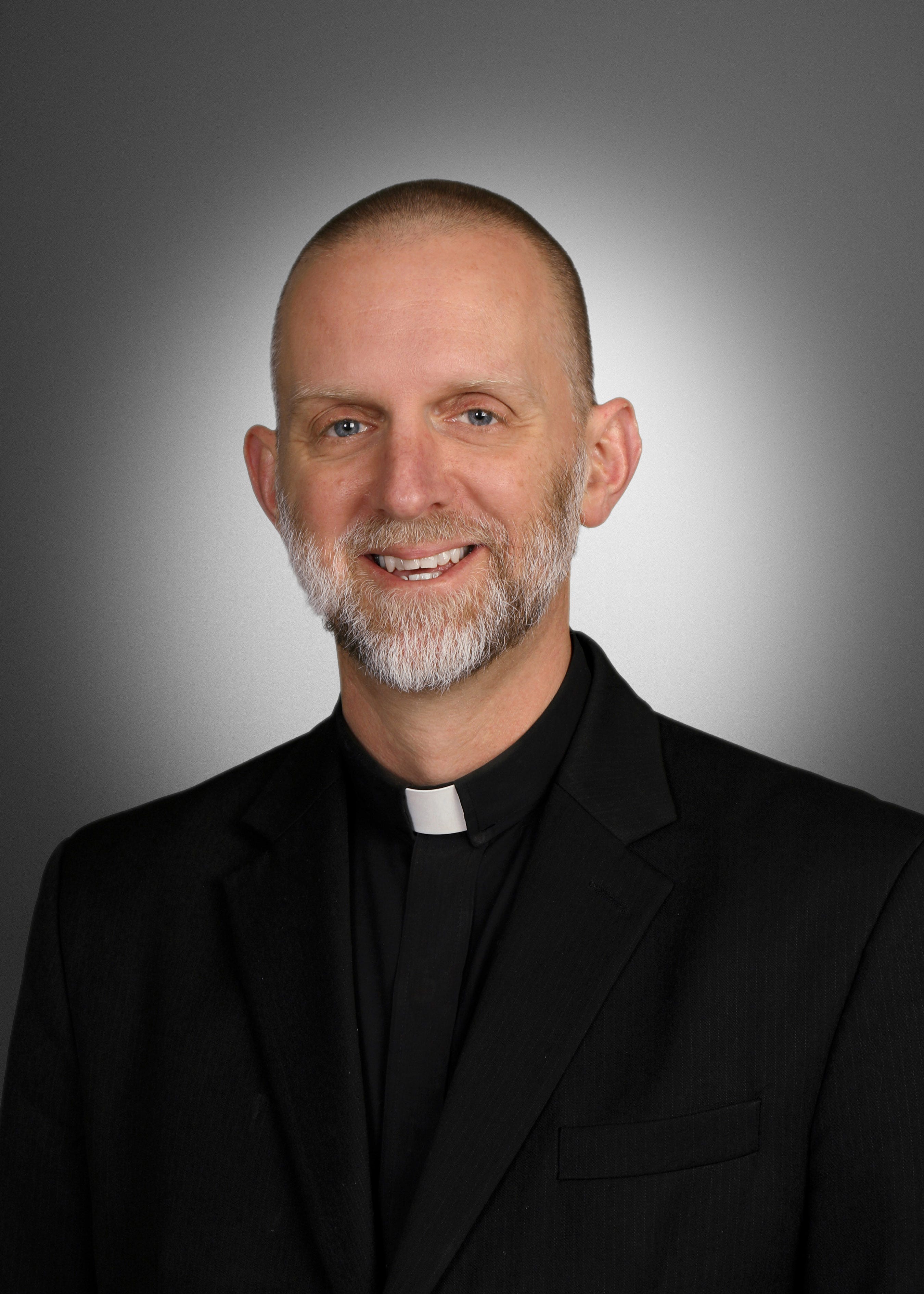
Rev. Matthew Best serves as pastor of Christ Lutheran Church in Harrisburg, PA as well as the executive director of the Christ Lutheran Health Ministries. The church operates three free health clinics that serve approximately 10,000 people each year. Matthew serves on a variety of boards and committees in the community and the larger church. He is also one of the authors of American Roulette, a work of fiction that addresses gun violence. In addition, he is the co-founder of the Memorial Blanket Project, which raises awareness of homelessness in the US. Matthew is a distance runner, is married and he and his wife have four young adult children and a dog and reside in Carlisle, PA.
Thank you for this important ministry and the love you are sharing with the world.
Thank you Pastor Best and ELCA Evangelism Network for this hopeful and inspiring post!